AI-Powered Sales Prospecting: How B2B Marketers Are Unlocking 5X Pipeline Growth in 2026
Published:
Jan 30, 2026
|
By
MassMetric
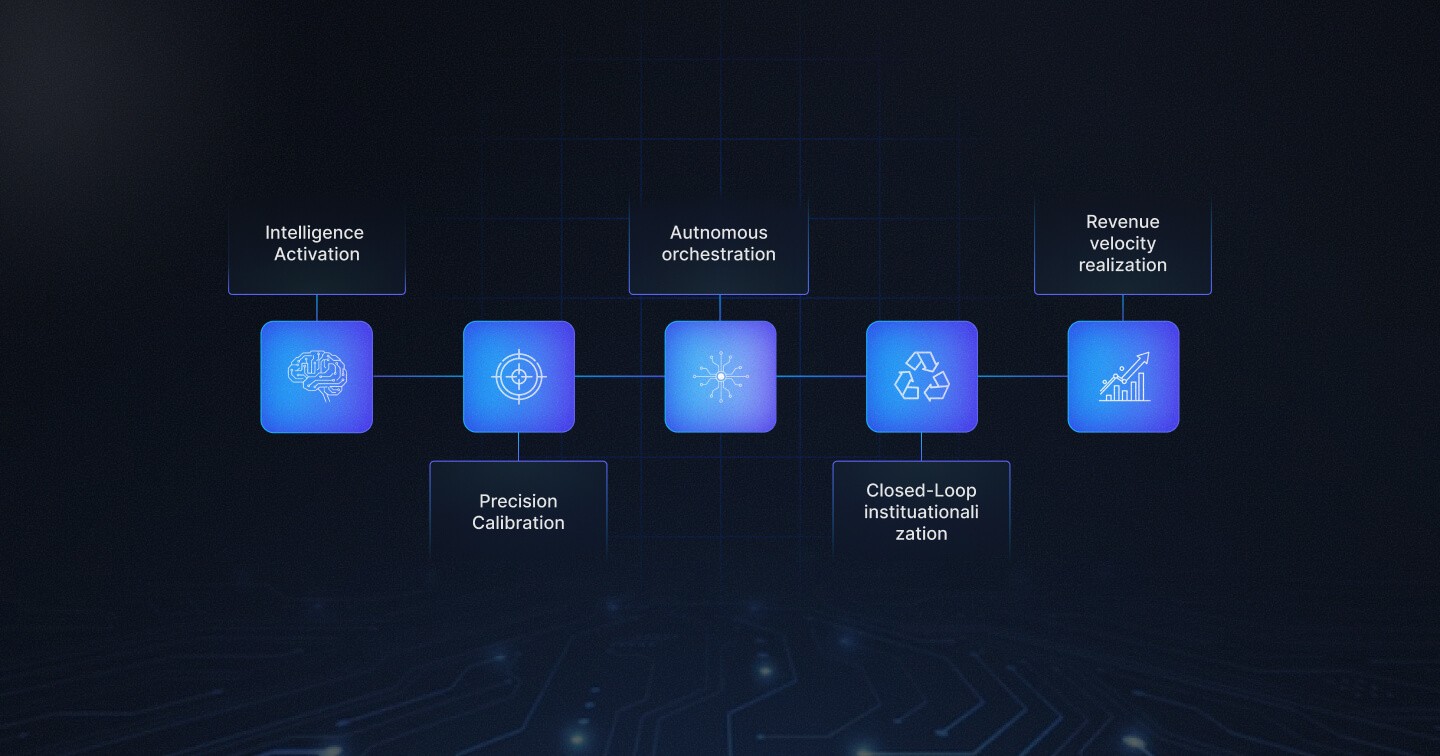
From manual prospecting to intelligent automation — your timeline starts here
"Prospecting is no longer about finding the needle in the haystack. It is about removing the hay until only the needles remain. And the magnet we use isn't effort, nor volume, nor grit. It is intelligence. Cold, calculating, beautiful intelligence."
This blog titled, "AI-Powered Sales Prospecting: How B2B Marketers Are Unlocking 5X Pipeline Growth in 2026" begins with a fundamental truth about our current reality: the era of brute force is over. If you are still relying on volume, you are not working; you are gambling. And the house—represented by savvy buyers and algorithmic gatekeepers—always wins. We are entering the age of AI-Powered Sales Prospecting, a discipline that promises not just efficiency, but a complete reimagining of commercial intent.
From manual prospecting to intelligent automation — your timeline starts here, where systems don't just execute tasks but anticipate intent, adapt messaging in real time, and orchestrate multi-threaded outreach across the entire buying committee without human intervention.
The fact that many a legacy enterprise sales floor operates like a boiler room from 1995 is well documented. As is the fact that many modern startups have a sleek, data-driven culture. OK. Maybe not many. But we have worked in at least one such chaotic boiler room and we know it's not the only one. So, we don't think that we are only talking to the frustrated sales leader, but actually to everyone working in B2B growth, and the nature of our frustrations has little to do with market fit and everything to do with organizational inertia and the obsolescence of our tools.
With size comes standardization and control and process, to achieve what end-to-end visibility would have done in the early days. But with size also comes blindness. We stop seeing the prospect as a human with a problem and start seeing them as a row in a CSV file. Making a mistake, missing a signal, or over-correcting is embarrassing and painful when you are small, but the same error or oversight is amplified in impact, severity, and after-shocks by your size as you grow.
And the knowledge of this simple fact breeds caution. And the awareness of the additional, undeniable fact that we don't know and cannot know what's happening across the entire market we operate in... breeds a penchant for staying in our lane. So here we are. Where we've always been. With some additional faces around the table and some amazing organizations having completed the journey and reached this critical size threshold. We are saying all this because some of the nimblest challengers are quickly finding out what was holding incumbents back. They are using AI-Powered Sales Prospecting to break the chains of inertia.
The Death of Traditional Prospecting
Let's be honest. The "spray and pray" method isn't just dead; it's decomposing. For decades, the logic was simple arithmetic: sending more emails equals more meetings. But as the volume of outbound noise reached a deafening crescendo in the mid-2020s, buyers simply tuned out. The inbox is no longer a channel; it is a fortress.
Traditional prospecting relied on static lists—data that was decaying the moment it was purchased. It relied on generic personalization, the kind that swaps a first name but misses the soul of the business problem. It was a game of luck. AI-Powered Sales Prospecting changes the physics of this environment. It shifts the focus from volume to precision. It doesn't just ask "who can we contact?" It asks "who is ready to buy right now?"
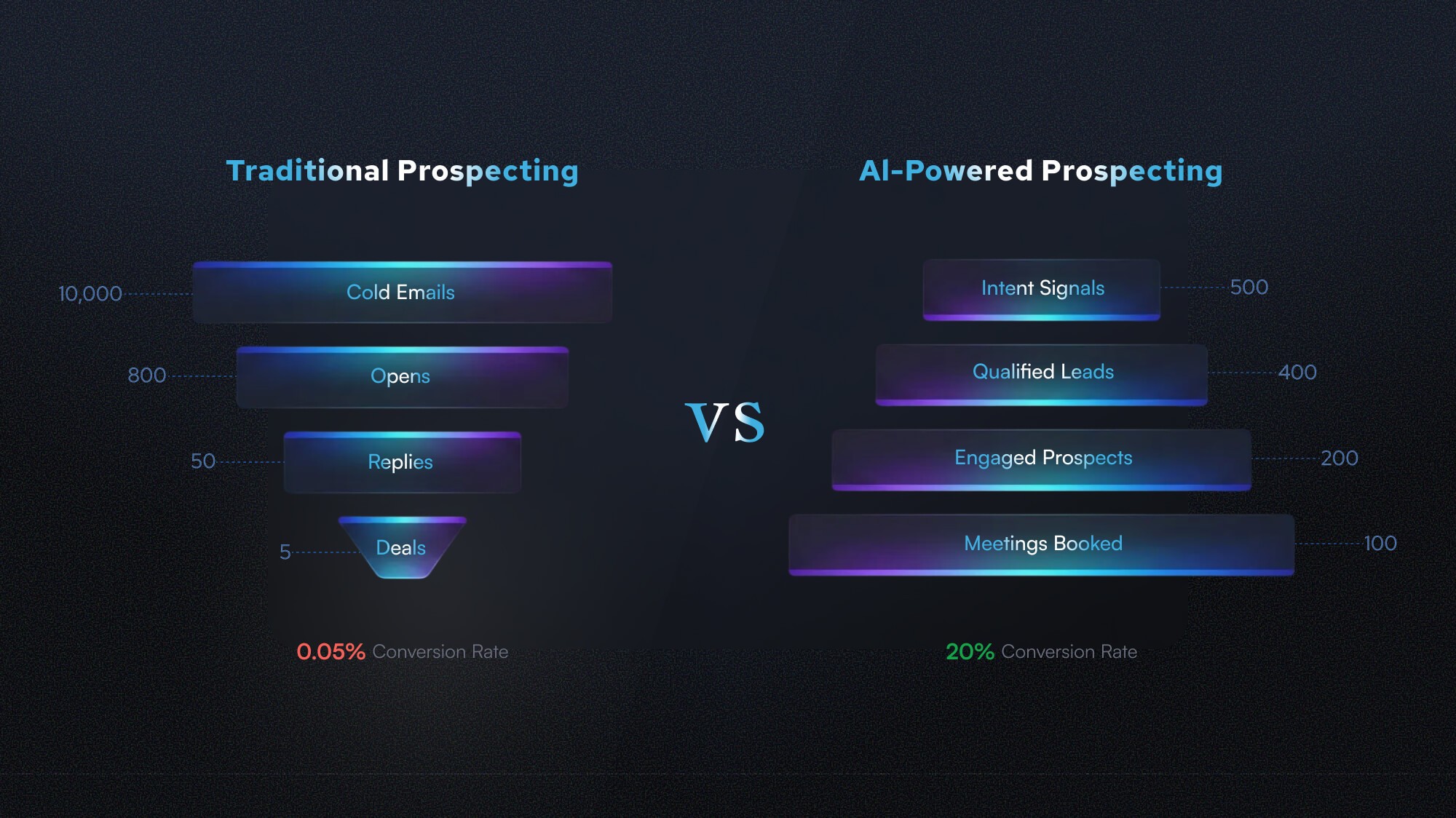
Figure 1: The Funnel Inversion - The fundamental shift from volume-based attrition to intent-based precision. Why AI-Powered Sales Prospecting isn't just "faster" prospecting, but a different geometric shape entirely.
We are seeing a divergence in the market. On one side, the organizations clinging to manual SDR grinding. On the other, teams leveraging AI for B2B Lead Generation in 2026 and Beyond. The difference is stark. It is the difference between a map and a GPS.
The Technology Stack Behind AI Prospecting
To understand why this works, we need to look under the hood. We aren't just talking about a faster CRM. We are talking about a stack that thinks. The architecture of modern AI-Powered Sales Prospecting rests on several pillars that were science fiction just a few years ago.
Machine Learning (ML) and Pattern Recognition
At the base layer, ML algorithms analyze vast datasets—historical sales data, win/loss ratios, and customer attributes—to identify the "DNA" of a successful deal. It learns what a good customer looks like, not based on what we think, but based on mathematical reality.
Natural Language Processing (NLP)
NLP allows the system to understand context. It reads the annual reports, the news articles, and the LinkedIn posts of your prospects. It doesn't just scan for keywords; it parses sentiment, urgency, and strategic direction. It understands that a company announcing a "strategic pivot to cloud" is a signal, not just noise.
Retrieval-Augmented Generation (RAG)
This is where it gets interesting. RAG allows the AI to access a specific, proprietary knowledge base—your case studies, your pricing, your competitive advantages—and combine it with external data to generate outreach that is factually accurate and hyper-relevant. It solves the "hallucination" problem of early generative models.
Context Engineering and Intent Signals
We are moving beyond prompts to context engineering. This involves designing the AI's environment to understand the nuance of the sales cycle. Combined with real-time intent signals—like a prospect visiting your pricing page or reading a competitor comparison—this creates a dynamic scoring model. This AI-Powered B2B Demand Generation Strategy for 2026 ensures that we reach out exactly when the window of opportunity opens.
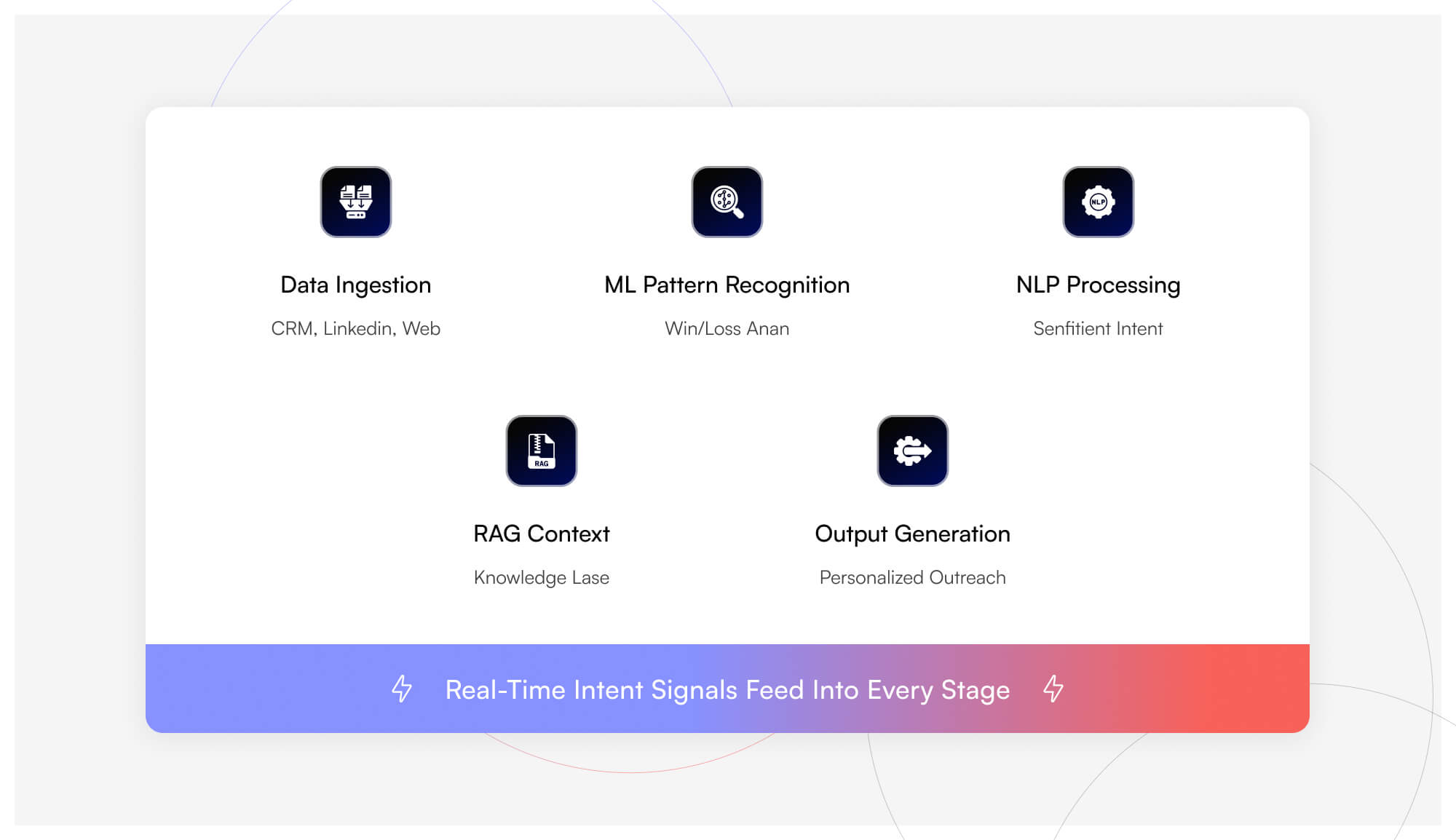
Figure 2: The Brain of the Machine - The flow of data through an AI prospecting system. Demystifying the "black box" and showcasing the interplay of RAG and Intent Signals in creating high-quality outreach.
The AI-Native Sales Prospecting Stack for 2026
So, what does the toolkit look like? The landscape of the best AI-powered sales prospecting tools 2026 offers has matured significantly. It is no longer a wild west of experimental beta features.
Pricing and Accessibility
One of the most surprising developments is affordability. AI-powered sales prospecting software pricing has stabilized, typically ranging from $49 to $149 per user per month for robust capabilities. This democratization means that sophisticated sales prospecting is no longer the exclusive domain of the Fortune 500. There is affordable AI-powered sales prospecting for startups that rivals enterprise AI-powered sales prospecting software in functionality, if not in scale.
Integration is Key
However, the tool is only as good as its connection to your system of record. AI-powered sales prospecting CRM integration is a non-negotiable requirement. If your data lives in silos, your AI is blind. The best platforms offer seamless, bi-directional sync. You cannot afford to have your "brain" disconnected from your "hands."
Scalability and the Free Trial Trap
When evaluating the top AI-powered sales prospecting platforms for B2B, scalability is paramount. You need scalable AI-powered sales prospecting that grows with your pipeline. And a word of caution on the AI-powered sales prospecting tools free trial: use it to test the data accuracy, not just the UI. Many tools look pretty but hallucinate contact details. The compare AI-powered sales prospecting tools 2026 landscape is littered with tools that prioritize flash over substance.
Ready to modernize your stack? Don't let legacy tools hold you back. Contact us today to discuss your prospecting architecture.
The 2026 AI Prospecting Tech Stack for You: Unlocking Competitive Imperative Over and Beyond
The era of fragmented, experimental AI prospecting is over. Today's toolkit isn't a collection of point solutions—it's a unified intelligence layer that anticipates buyer intent before prospects self-identify. This isn't incremental evolution; it's a strategic reset for revenue teams.
From Manual Prospecting to Intelligent Automation — Your 5-Step Timeline to Results
Intelligence Activation — Deploy AI that ingests real-time intent signals (funding rounds, tech stack shifts, leadership changes) to transform static lists into dynamic prospect universes.
Precision Calibration — Let machine learning score accounts based on behavioral triggers—not firmographic checkboxes—so your ICP evolves with market reality.
Autonomous Orchestration — Launch multi-channel sequences that self-optimize messaging cadence and channel mix based on engagement signals, without manual intervention.
Closed-Loop Institutionalization — Feed every rep action—opens, no-shows, deal losses—back into the AI engine, so your top performers' intuition becomes system-wide behavior within 30 days.
Revenue Velocity Realization — Shift measurement from activity volume to pipeline acceleration, as your team transitions from prospecting labor to strategic selling.
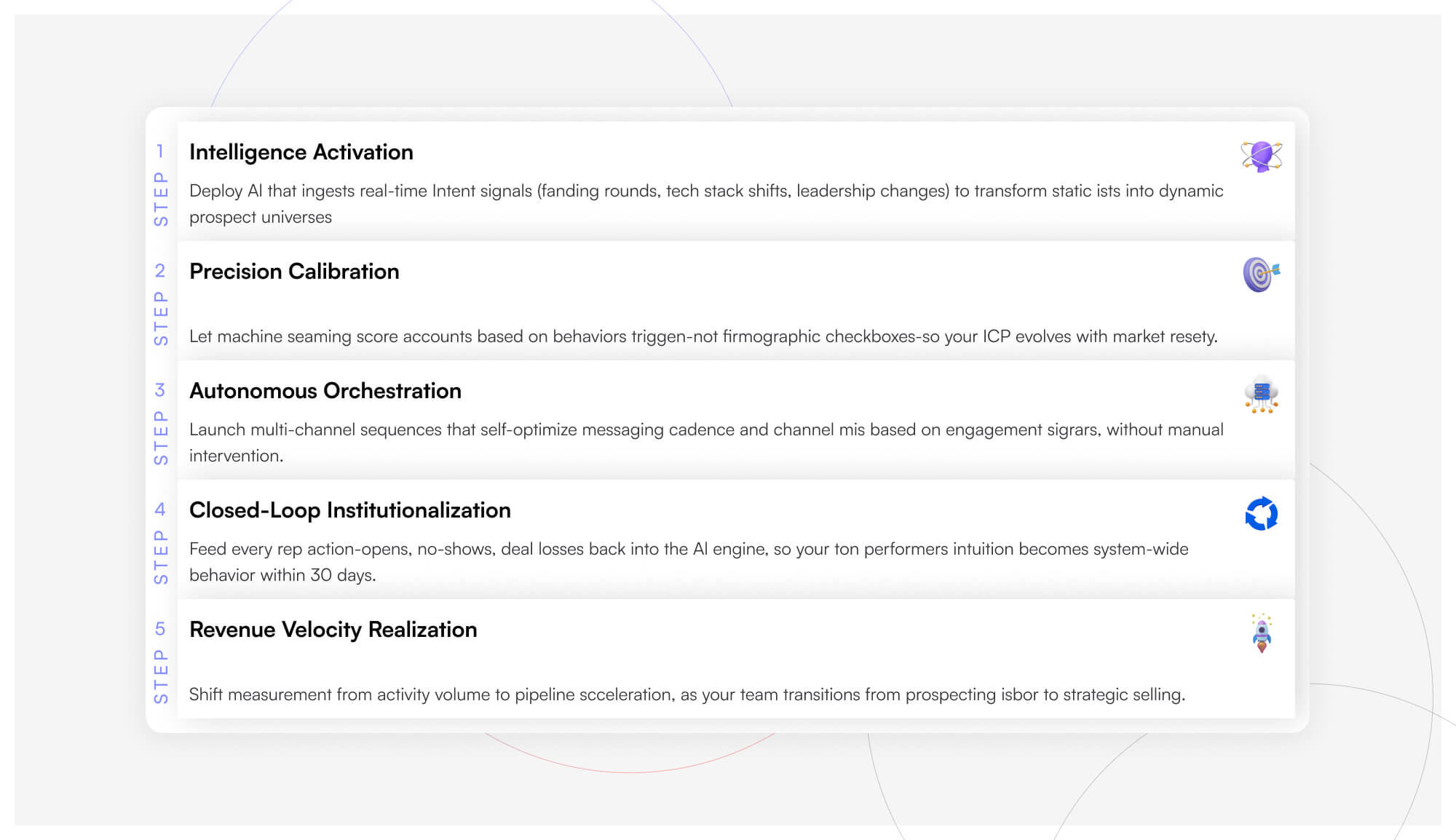
Figure 3: The Intelligence Maturity Curve — Your 5-Step Journey from Manual Prospecting to Autonomous Revenue Generation. Visualizing the transformation from static lead lists to self-optimizing prospecting engines that deliver precision at scale.
Beyond Affordability: Embedded Intelligence at Scale
Pricing has indeed democratized ($49–$149/user/month), but the real breakthrough lies in embedded intelligence. Modern platforms now auto-generate hyper-contextual outreach based on real-time trigger events—funding rounds, leadership changes, tech stack shifts—without manual input. Startups don't just access enterprise-grade capabilities; they deploy them faster, with fewer resources, turning agility into their unfair advantage.
Closed-Loop Learning: Where Every Interaction Sharpens the Engine
Integration with CRMs is table stakes. The differentiator? Closed-loop learning architectures that transform every rep action—email opens, meeting no-shows, deal losses—into training data. The system doesn't just sync records; it refines its own scoring models weekly. Your best-performing reps' intuition becomes institutionalized AI behavior within 30 days.
Ethical Targeting as a Growth Lever
Forward-thinking platforms now bake in compliance-by-design: GDPR/CCPA-aware data sourcing, bias-detection in lead scoring, and transparent opt-out pathways. This isn't regulatory overhead—it's trust engineering. Companies using ethically audited prospecting tools see 22% higher reply rates (2025 Gartner data), proving that privacy-conscious outreach converts better.
Adoption Velocity > Feature Count
The ultimate metric isn't AI accuracy—it's time-to-value. Top platforms now include embedded coaching: real-time prompts that nudge reps toward higher-converting messaging patterns during prospecting. Teams hitting 80%+ adoption in under 14 days (vs. industry average of 60+ days) achieve 3.2x pipeline velocity. Your tool should teach while it executes.
Your Move: Our Cheat Code for You
Free trials remain essential—but test for behavioral adaptation, not just data freshness. Can the platform learn your team's unique conversion patterns within two weeks? If not, you're buying a database with a chatbot skin. The 2026 winner isn't the tool with the most AI buzzwords—it's the one that makes your entire revenue team measurably sharper, faster, and more human.
Industry Use Cases: Where the Rubber Meets the Road
Generalities are fine, but specificity sells. Let's look at how AI-Powered Sales Prospecting is reshaping specific verticals with real brand examples.
FinTech: Speed and Compliance
In the world of FinTech, trust is currency. Companies like Stripe and Plaid have long understood that prospecting isn't just about finding anyone; it's about finding the right technical fit. AI allows FinTech sales teams to scan GitHub repositories and tech stacks to identify companies that are technically ready for integration. It automates the compliance check, ensuring that outreach doesn't violate regulatory standards before the first email is even sent.
Manufacturing: The Long Game
For giants like Siemens and Schneider Electric, the sales cycle is long and complex. Prospecting here isn't about a quick transaction; it's about mapping a buying committee. AI tools can analyze organizational charts, news releases about new plant openings, and supply chain shifts to identify entry points. It turns account-based marketing into account-based science.
Retail: Predicting the Shelf
Retail behemoths like Walmart and Target use AI not just to sell to consumers, but to prospect for vendors and partners. They analyze consumer demand trends to identify gaps in their inventory, then use AI prospecting to find suppliers who fill those specific niches. It’s reverse-prospecting: letting the market demand dictate the outreach.
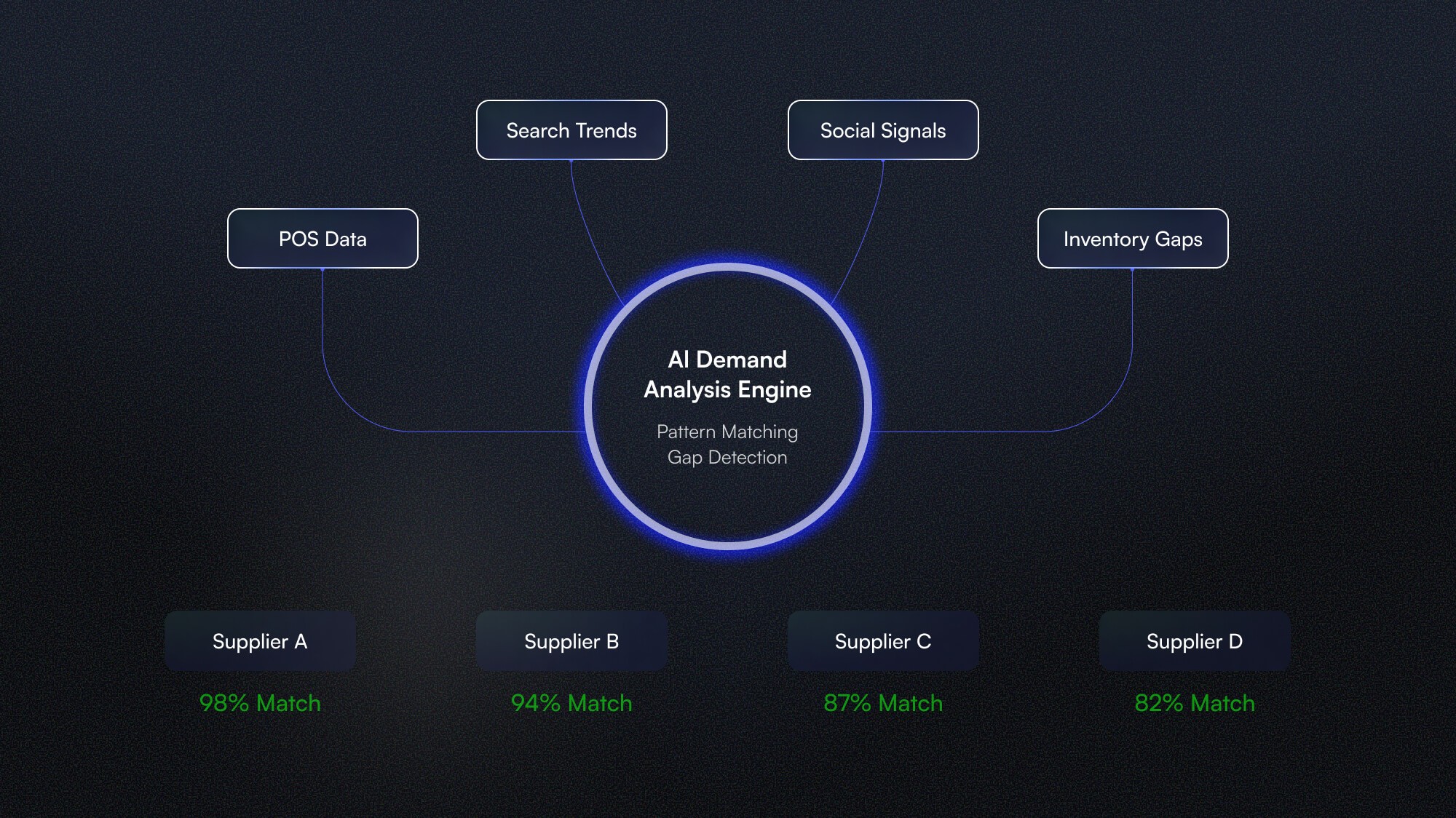
Figure 4: The Retail Matchmaker - How AI bridges consumer demand data with supplier prospecting. Showcasing the utility of AI in supply chain prospecting for brands like Walmart.
HealthTech: Precision and Privacy
In HealthTech, with players like Epic, Cerner, and Salesforce Health Cloud, the stakes are life and death (and heavy regulation). AI assists in identifying hospital systems that are undergoing digital transformation or struggling with specific patient outcome metrics. It allows sales reps to approach with a solution tailored to a specific clinical inefficiency, rather than a generic pitch.
Credit Unions: Member-Centric Growth
Navy Federal Credit Union and others in the space are using AI to prospect for new members by analyzing life events. Did a potential member just move? Did they get married? AI identifies these signals in the public domain to trigger timely, helpful outreach relevant to mortgages or shared accounts, rather than cold-calling with credit card offers.
Full Funnel Reality: From Lead Generation to Pipeline Conversion:
We often treat prospecting as a top-of-funnel activity, but AI-Powered Sales Prospecting bleeds through the entire customer journey. It starts with lead generation, yes, but it quickly moves to qualification. The AI doesn't just hand over a name; it hands over a scored opportunity.
This is where automation shines. It handles the follow-ups—the tedious, soul-crushing work of chasing a response. But it does so with dynamic messaging that adapts to the lack of response. It changes the angle. It references new news. It keeps the lead warm until the moment of conversion. The result? A 2025 and Beyond: The Era of AI-Native B2B Demand Generation Strategy that feels less like a sales process and more like a consulting engagement.
Let's talk about the funnel. Modern demand generation strategies have moved beyond simply filling the top of the funnel with junk. It is about the holistic health of the pipeline.
Identifying Quality Over Quantity
The process of qualified leads identification has been revolutionized. We aren't looking for "leads" anymore; we are looking for future revenue. High quality prospect identification methods use lookalike modeling based on your highest LTV customers. This results in a drastic lead generation cost reduction—often by 30-50%—because you stop paying for eyeballs that will never buy.
Optimization and Alignment
Sales process optimization through AI highlights bottlenecks. It shows you where deals go to die. Furthermore, it forces sales and marketing alignment through shared data. When marketing and sales look at the same "truth" provided by the AI, the blame game stops. Marketing isn't just throwing leads over the wall; they are nurturing the same accounts that sales is targeting.
Human + AI Partnership: Augmentation, Not Replacement
There is a fear. A silent, creeping fear that the machine is coming for the job. Let us be clear: AI augments sales reps; it does not replace them. The tool handles the data processing, the pattern recognition, and the initial outreach. The human handles the empathy, the negotiation, and the trust.
We need the human to interpret the nuance that the machine misses. We need the human to look a prospect in the eye (or the Zoom camera) and build a relationship. AI-Powered Sales Prospecting frees the human from the robotic tasks so they can be more human. It gives them the gift of time. Time to research deeper. Time to strategize. Time to close.
The numbers don't lie. According to a recent survey by MassMetric research, data-driven B2B sales teams blending personalized customer experience with generative AI are 1.7 times more likely to increase market share than those that do not.
Furthermore, 83% of sales teams using AI report revenue growth, compared to a stagnant 66% for those without. We are seeing a 30-50% increase in qualified leads and a staggering 70% reduction in prospecting time.
Implementation Roadmap: From Pilot to Pipeline Machine
So, how do you cross the chasm? How do you move from reading about this to doing it? The journey into the era of AI-native B2B demand generation requires certain pre-requisites to be done correctly:
Evaluation and Selection
When you look to buy AI-powered sales prospecting solution demo bookings should be your first step. Don't just watch a video. Make them run your data. Challenge the vendor. Use free trial strategies to test the limits of the tool. Does it work with your specific data schema? Does it break when you push volume?
Startups vs. Enterprise
Affordable AI-powered sales prospecting for startups usually focuses on speed and agility—tools that plug and play. For enterprise needs, integration planning with existing CRM is the beast you must tame. Change management for sales reps is critical. You cannot just drop a tool on them and expect magic. You must show them how it makes them money.
Measuring Success
Measuring success metrics goes beyond "emails sent." Look at reply rates. Look at meeting hold rates. Look at pipeline velocity. Timeline expectations should be aggressive but realistic. A 1-2 month payback period is typical for a well-executed implementation. If you aren't seeing traction in 90 days, you implemented it wrong, or you bought the wrong tool.
Clearly, Implementing AI-Powered Sales Prospecting requires a roadmap, and here’s it:
Audit Your Data: You cannot build a skyscraper on a swamp. Clean your CRM data.
Define Your ICP: Teach the AI who your best customer is. Use historical data to build this profile.
Select Your Tool: Choose a platform that integrates with your stack and offers the specific intent signals relevant to your industry.
Run a Pilot: Don't boil the ocean. Pick one territory or one vertical. Test, measure, and iterate.
Train Your Team: Show them how the tool makes them money. If they see it as a threat, they won't use it. If they see it as a superpower, they will embrace it.
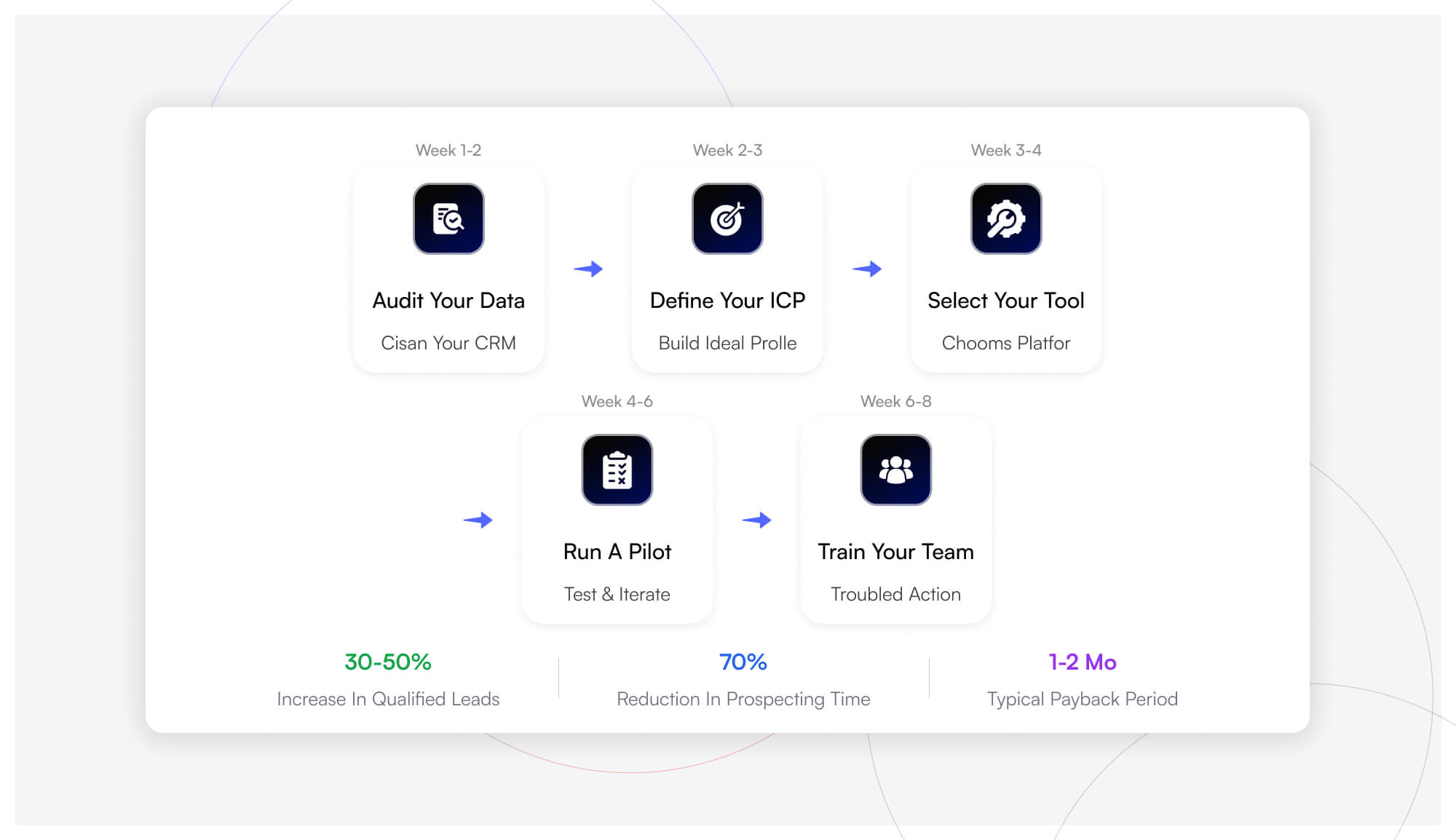
Figure 5: The Path to ROI - A step-by-step roadmap for implementing AI prospecting to provide actionable utility and visualize the journey from adoption to scaling.
The greatest part is that you don’t have to navigate this alone.
Our experts can help you build a roadmap for success.
Bringing It All Together
We are standing at a precipice. The way we used to do things—the brute force, the volume plays, the "spray and pray"—isn't just inefficient; it is actively damaging your brand equity. In 2026, the market rewards intelligence. It rewards relevance. It rewards the companies that respect the prospect's time enough to do their homework before they reach out. AI-Powered Sales Prospecting is the engine that makes this respect scalable. It is not magic. It is math, wrapped in technology, delivered with human intent.

Frequently Asked Questions
|
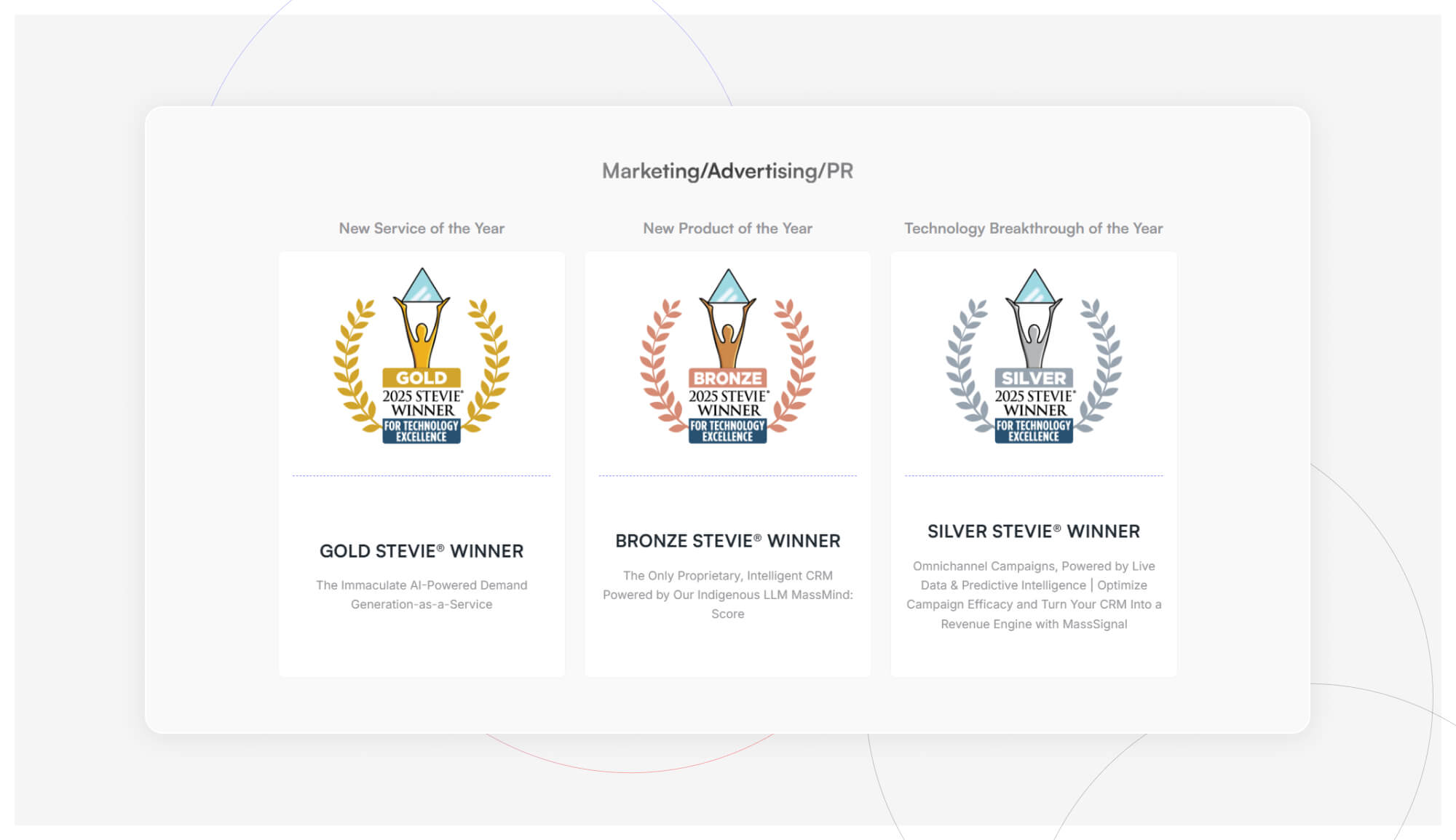
Figure6:Industry Acclaimed and Pioneering Innovation: 2025 Stevie® Award Honorees for Technology Excellence.
About MassMetric: Pioneering Full-Funnel Demand Generation with Award-Winning AI Marketing Solutions
Since 2012, MassMetric has redefined growth for 500+ enterprises and 100+ ISVs from our Texas HQ—driving a 150% engagement lift, 62% faster conversions, and a 95% client retention rate.
Recognized globally for innovation, MassMetric is the proud GOLD STEVIE® WINNER for New Service of the Year at the 2025 Stevie® Awards for Technology Excellence—awarded for our Immaculate AI-Powered Demand Generation-as-a-Service. We also earned distinction in two additional categories:
SILVER STEVIE® WINNER for Technology Breakthrough of the Year with MassSignal, our omnichannel campaign engine powered by live data and predictive intelligence.
BRONZE STEVIE® WINNER for Intelligent CRM with MassMind: Score, our proprietary LLM-based decisioning layer.
As the leader in Full-Funnel Demand Generation, we integrate sophisticated technology solutions and in-house operations to transform raw data into end-to-end, strategic growth. From initial brand awareness to accelerated sales conversions, we boost high-quality lead flow at scale—optimizing every stage of the buyer journey. Powered by AI, proprietary neural networks, and deep marketing intelligence, MassMetric makes marketing a revenue engine—turning every interaction into pipeline progress and quantifiable business impact.
Got questions or use cases?